
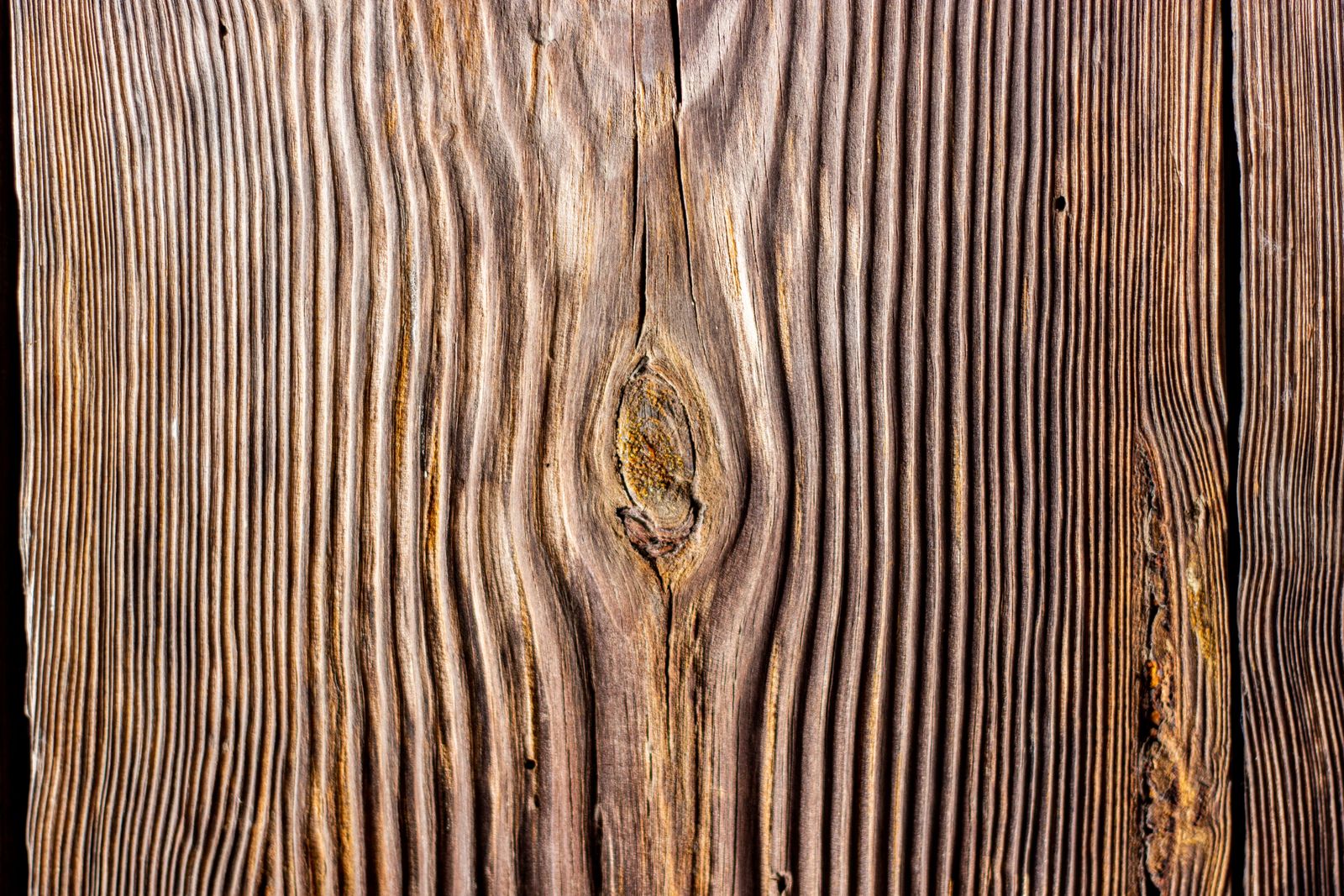
Most materials look the same whether you glance at them or study them. Wood grain is the opposite. The closer you look, the more it reads less like a surface and more like a map, a record of years, weather, and stress laid down one ring at a time.
Every line is a decision the tree made
Grain isn't random. Tight, straight lines usually mean slow, steady growth. Wider bands mean a good year. A knot marks where a branch once was. None of it is applied to the wood, all of it is the wood, which is part of why no two pieces, even from the same tree, ever look quite the same.
Why walnut, oak, and maple read so differently
Walnut's grain runs deep and irregular, full of contrast between heartwood and lighter streaks. White oak shows bold, open rays that catch light at an angle. Maple stays tight and quiet, almost uniform, which is exactly why it shows off color and finish so cleanly. Three species, three completely different visual languages, all from the same basic material.
Finishing reveals it, it doesn't create it
A good oil or wax finish doesn't add character to wood, it just gets out of the way of character that was already there, deepening contrast and giving the grain room to catch light properly. A bad finish, sprayed on thick and even, can flatten all of that back out. This is most of why hand-finishing takes real time to get right.
Looking closer is the whole point
None of this changes how a tray functions. But a piece of furniture you've actually looked closely at, once, stops being just an object and starts being something you notice again every time you use it. That's a small thing. It's also most of the reason solid wood is worth the extra cost over anything that fakes it.